
 Free Estimate
 Financing
 Commercial Solutions
 Maintenance
 Bill Pay
5 Red Flags to Look For in Your Home After Washington’s Extreme Flooding
Don’t let hidden moisture become a crisis. Learn how to spot sump pump failures, new cracks, and musty odors after the rain stops.
Tacoma, WA – Living in Western Washington, we’re no strangers to rain. But the recent atmospheric river was a different beast. When that much water hits our clay-heavy soils, the ground becomes a saturated sponge, putting immense pressure on your home’s foundation.
At TerraFirma, we’ve spent over 20 years helping homeowners from Tacoma to Portland navigate the Pacific Northwest climate. Many think foundation “waterproofing” is a permanent seal, but in reality, it’s about water management. If your neighborhood saw flooding, your home’s “envelope” was pushed to its limit. Here are five critical things to check to ensure your home stays stable and dry.
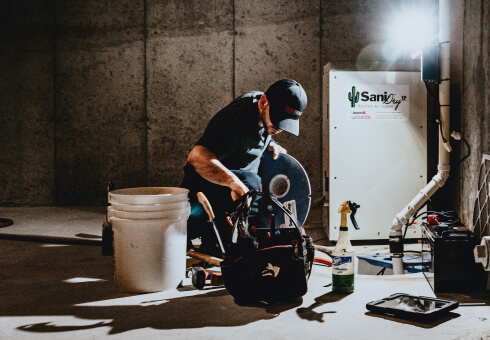
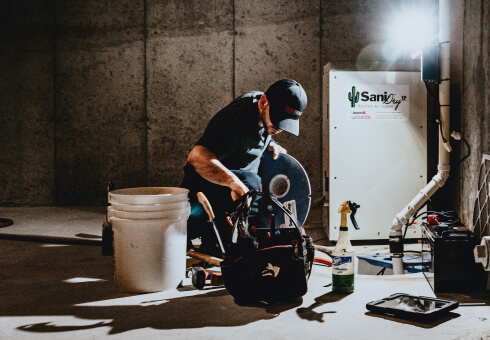
1. The Sump Pump “Stress Test.”
Your sump pump is the heart of your home’s flood defense. During an atmospheric river, these pumps work overtime, sometimes cycling every few minutes for days.
- What to check: Open your sump basin. Is the pump still running? Is there an accumulation of silt or debris that washed in with the floodwaters?
- The Pro Tip: If your pump struggled to keep up or you lost power, consider a TripleSafe™ system. It includes a secondary pump for heavy flow and a battery backup that can pump out over 11,000 gallons even during a power outage.
1. The Sump Pump “Stress Test.”
Your sump pump is the heart of your home’s flood defense. During an atmospheric river, these pumps work overtime, sometimes cycling every few minutes for days.
- What to check: Open your sump basin. Is the pump still running? Is there an accumulation of silt or debris that washed in with the floodwaters?
- The Pro Tip: If your pump struggled to keep up or you lost power, consider a TripleSafe™ system. It includes a secondary pump for heavy flow and a battery backup that can pump out over 11,000 gallons even during a power outage.
2. New or Widening Cracks
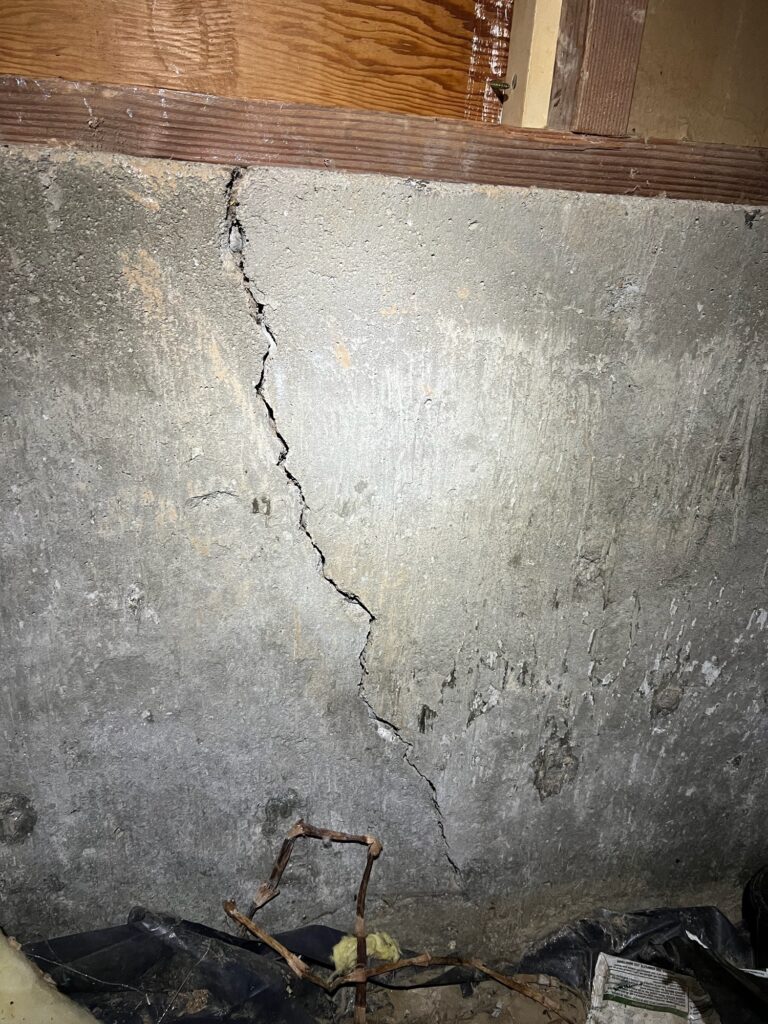
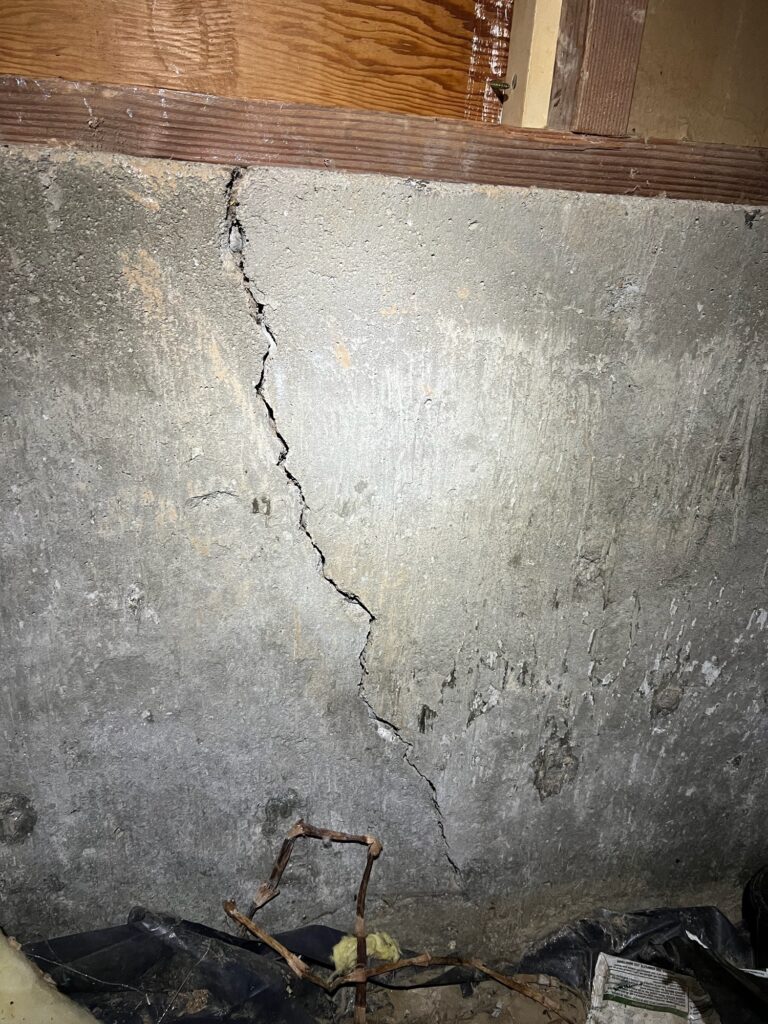
Concrete is strong but brittle. Saturated soil expands and puts “shear forces” on your foundation, causing it to crack.
- What to check: Inspect the basement walls or the exterior stem wall of your crawl space. Look for new stair-step or horizontal cracks.
- The Pro Tip: Don’t just caulk them. Sealing a crack from the inside is a temporary fix. If you see cracks combined with sticking doors or windows, your foundation may be settling, and you might need piers to stabilize the structure.
2. New or Widening Cracks
Concrete is strong but brittle. Saturated soil expands and puts “shear forces” on your foundation, causing it to crack.
- What to check: Inspect the basement walls or the exterior stem wall of your crawl space. Look for new stair-step or horizontal cracks.
- The Pro Tip: Don’t just caulk them. Sealing a crack from the inside is a temporary fix. If you see cracks combined with sticking doors or windows, your foundation may be settling, and you might need piers to stabilize the structure.
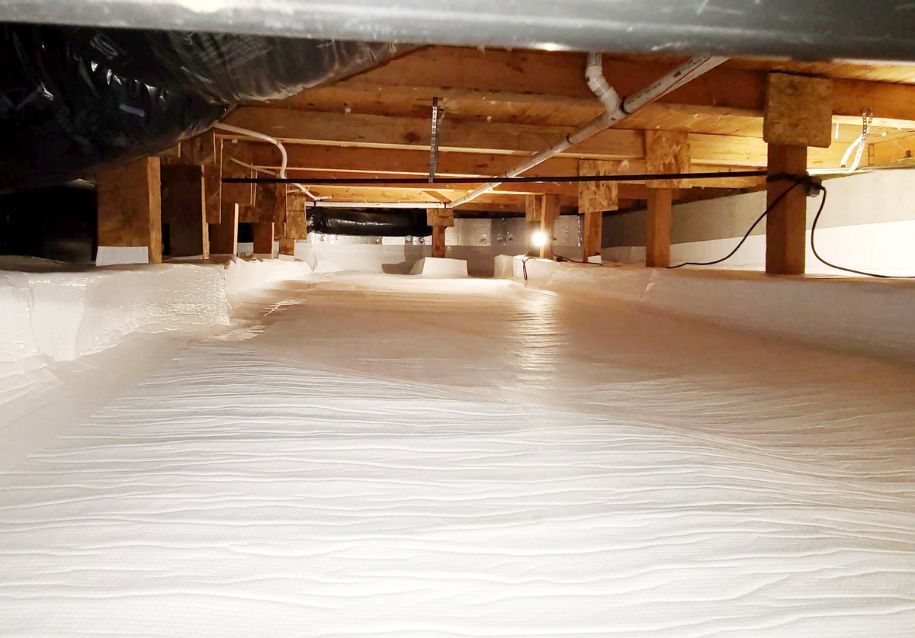
3. The “Musty” Air Test
In the PNW, we often shrug off damp smells, but that odor is a warning sign. About 50% of the air on your first floor comes directly from your crawl space or basement.
- What to check: Does your living area smell like a wet forest?
- The Pro Tip: A persistent smell means your vapor barrier may have shifted or your insulation is damp. Crawl space encapsulation sealing the area with a liner like VaporLoc Elite is the only way to permanently stop “swamp monster” odors and mold growth.
3. The “Musty” Air Test
In the PNW, we often shrug off damp smells, but that odor is a warning sign. About 50% of the air on your first floor comes directly from your crawl space or basement.
- What to check: Does your living area smell like a wet forest?
- The Pro Tip: A persistent smell means your vapor barrier may have shifted or your insulation is damp. Crawl space encapsulation—sealing the area with a liner like VaporLoc Elite is the only way to permanently stop “swamp monster” odors and mold growth.
4. Standing Water vs. Hidden Moisture
The hidden danger is the moisture you can’t see. Water doesn’t just enter through holes; it wicks through porous concrete.
- What to check: Even if standing water has receded, check your wooden joists and sill plates. Do they feel damp? Is there a white, powdery substance (efflorescence) on the concrete?
- The Pro Tip: We use internal drainage channels and wall liners to catch this seepage and direct it to the sump pump before it ever touches your floor or framing.

4. Standing Water vs. Hidden Moisture
The hidden danger is the moisture you can’t see. Water doesn’t just enter through holes; it wicks through porous concrete.
- What to check: Even if standing water has receded, check your wooden joists and sill plates. Do they feel damp? Is there a white, powdery substance (efflorescence) on the concrete?
- The Pro Tip: We use internal drainage channels and wall liners to catch this seepage and direct it to the sump pump before it ever touches your floor or framing.
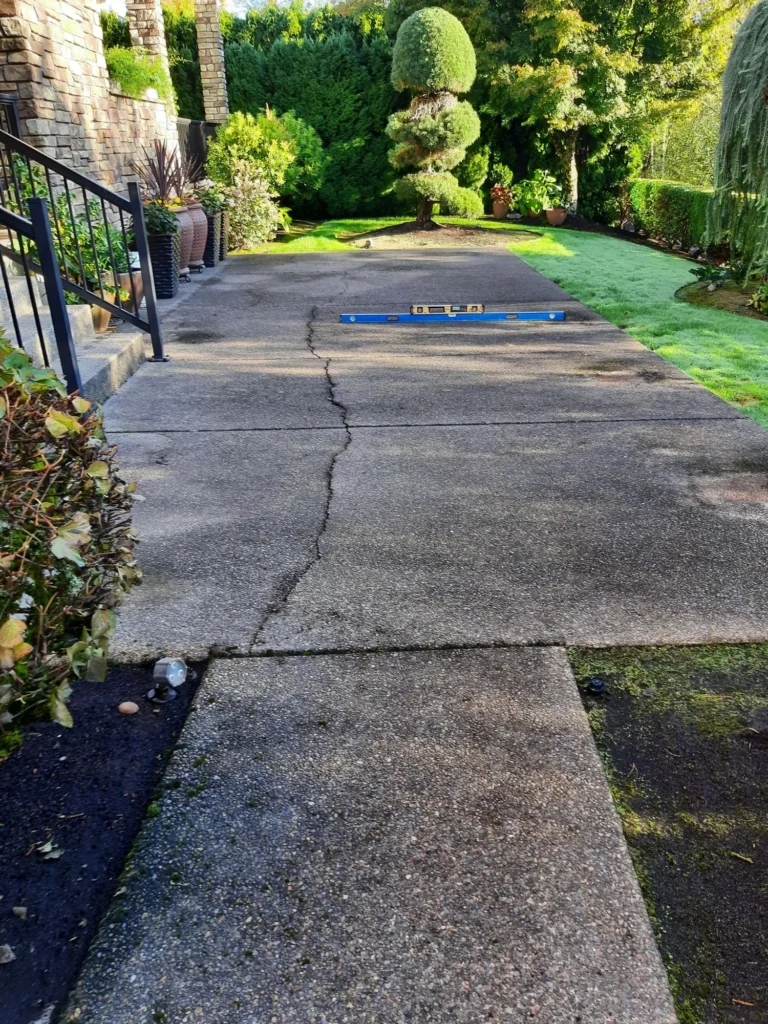
5. Concrete Buckling and “Street Creep”
Extreme wet-dry cycles cause driveways and sidewalks to shift. Saturated soil loses its load-bearing capacity, leading to sinking.
- What to check: Look where your driveway meets your garage. Is the concrete pushing against the house or sinking?
- The Pro Tip: If your porch or walkway buckled due to the rains, it can often be lifted and leveled back to its original position without the cost of a full replacement.
5. Concrete Buckling and “Street Creep”
Extreme wet-dry cycles cause driveways and sidewalks to shift. Saturated soil loses its load-bearing capacity, leading to sinking.
- What to check: Look where your driveway meets your garage. Is the concrete pushing against the house or sinking?
- The Pro Tip: If your porch or walkway buckled due to the rains, it can often be lifted and leveled back to its original position without the cost of a full replacement.
Don’t Wait for the Next Storm
The biggest mistake we see homeowners make is waiting … waiting till it dries out, waiting till ‘next summer,’ or waiting until the next storm to address damage from the last one. Moisture leads to rot, and rot leads to structural failure. At TerraFirma, we design engineered systems to keep your home’s envelope intact for decades.
Check Out Our Recent Waterproofing Projects & Tips
Schedule your free
Foundation Evaluation
Schedule your free
Foundation Evaluation
James Kershaw
James Kershaw is a Senior System Design Specialist and company trainer at TerraFirma, where he evaluates residential and commercial foundation, concrete, and waterproofing systems across Oregon and Washington. Over the course of his career, he has inspected thousands of homes throughout the Pacific Northwest, giving him a broad, real-world understanding of how regional soils, climate, and construction practices impact long-term structural performance.



