
 Free Estimate
 Financing
 Commercial Solutions
 Maintenance
 Bill Pay
The Truth About Winter Salt and Concrete Damage
2026 Update: As winter products and deicing methods continue to evolve, the effects of salt and chemical ice melt on concrete remain a key concern for homeowners. This updated article explains how freeze-thaw cycles damage concrete surfaces and shares current best practices for protecting driveways, sidewalks, and patios from long-term winter wear.
How Ice Melt Affects Your Driveway, Sidewalks, and Patios
When winter weather brings snow and ice, most homeowners rely on salt or chemical ice melt to keep driveways, sidewalks, and steps safe. While these products are effective at preventing slips and falls, they can quietly cause long-term damage to your concrete.
Understanding how winter salt affects concrete and what you can do to protect it can help extend the life of your driveway and avoid costly repairs.
Concrete Is Strong, But It’s Also Porous
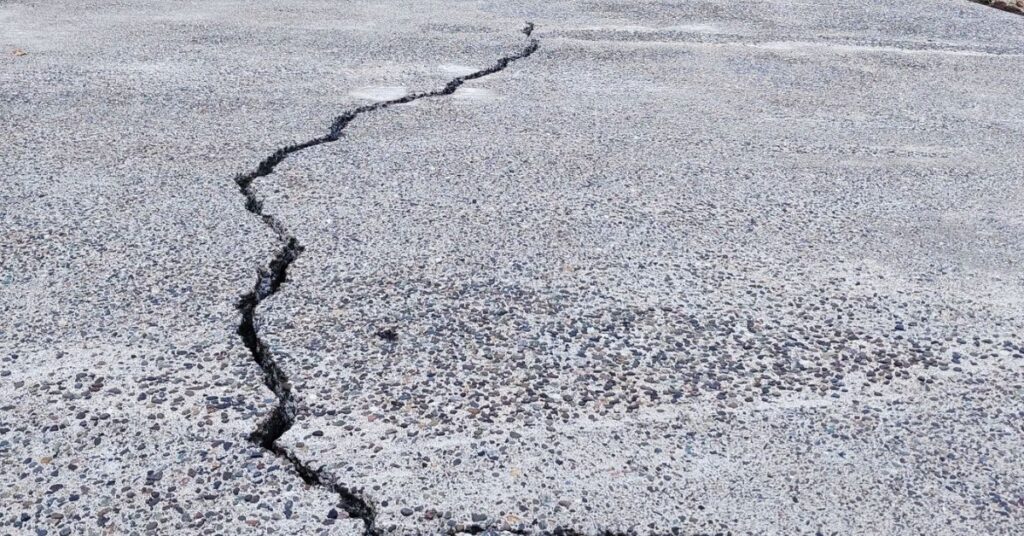
Concrete may look solid and durable, but it’s actually porous. Think of it like a very dense sponge. Tiny pores and capillaries run throughout the surface, allowing water to soak in, especially during winter when snow and ice sit on concrete for extended periods.
This natural porosity is what makes concrete vulnerable to freeze-thaw damage, especially when salt or ice melt is involved.
Concrete Is Strong, But It’s Also Porous
Concrete may look solid and durable, but it’s actually porous. Think of it like a very dense sponge. Tiny pores and capillaries run throughout the surface, allowing water to soak in, especially during winter when snow and ice sit on concrete for extended periods.
This natural porosity is what makes concrete vulnerable to freeze-thaw damage, especially when salt or ice melt is involved.
How Salt Damages Concrete Over Time
Traditional rock salt (sodium chloride) doesn’t just melt ice; it lowers the freezing point of water. When ice melts, it forms a salty liquid known as brine.
Here’s where the problem starts:
- Brine stays liquid at colder temperatures than plain water
- That liquid seeps deeper into the concrete’s pores
- When temperatures drop again, the brine refreezes inside the concrete
Water expands when it freezes, and repeated freeze-thaw cycles create intense internal pressure. Over time, this stress causes the concrete surface to break down.
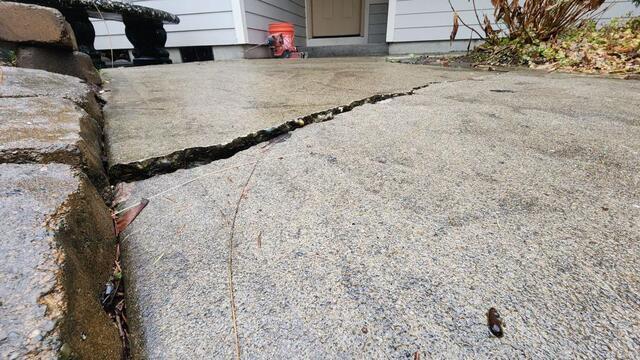
Common Signs of Salt Damage on Concrete
After several winters, homeowners may notice:
- Spalling (chipping or pitting of the surface)
- Flaking or scaling
- Cracks
- Rough, uneven textures
This type of damage often develops slowly, making it easy to overlook until it becomes expensive to fix.
Common Signs of Salt Damage on Concrete
After several winters, homeowners may notice:
- Spalling (chipping or pitting of the surface)
- Flaking or scaling
- Cracks
- Rough, uneven textures
This type of damage often develops slowly, making it easy to overlook until it becomes expensive to fix.
Are Chemical Ice Melts Safer Than Salt?
Many homeowners switch to chemical ice melts, such as calcium chloride or magnesium chloride, believing they’re automatically better for concrete. The truth is, it depends on how they’re used.
Most chemical ice melts still work by creating brine, but they’re effective at much lower temperatures. While that’s great for icy conditions, it also means:
- Brine stays liquid longer
- It penetrates deeper into concrete
- Overapplication increases freeze-thaw stress
Some chemical ice melts are also hygroscopic, meaning they actively attract moisture. This pulls even more liquid into the concrete, potentially accelerating damage rather than preventing it.
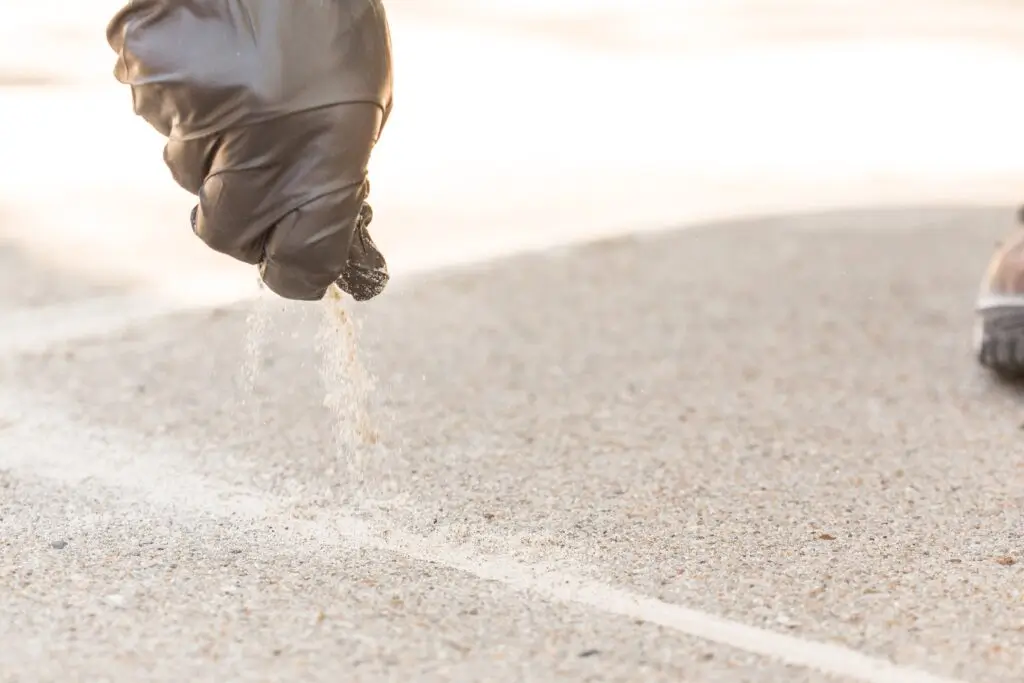
Expert tip: If you use chemical ice melt, apply it sparingly and only when necessary. More product doesn’t equal better protection, overapplication is one of the biggest causes of concrete damage. For milder winter conditions, consider using sand for traction instead of relying solely on ice melt, and always shovel excess snow first to minimize chemical exposure.
How to Protect Concrete from Winter Salt Damage
One of the most effective ways to protect concrete from salt and ice melt damage is by sealing the surface with a professional-grade concrete sealer like SealantPro®.
A high-quality concrete sealer acts like a raincoat for your driveway, sidewalk, or patio. It limits how much water and brine can penetrate the surface, reducing the internal stress that leads to cracking, spalling, and surface deterioration.
Unlike sealers that simply sit on top, SealantPro® chemically bonds with concrete, providing long-lasting protection that doesn’t wear away after a single season.
Benefits of Sealing Your Concrete
Sealing your concrete can:
- Reduce moisture and salt absorption
- Slow surface wear and deterioration
- Extend the lifespan of driveways, sidewalks, and patios
- Maintain a cleaner, more uniform appearance
- Protect curb appeal year after year
While sealing won’t stop winter weather, it adds a critical layer of defense exactly where concrete is most vulnerable, at the surface.
Benefits of Sealing Your Concrete
Sealing your concrete can:
- Reduce moisture and salt absorption
- Slow surface wear and deterioration
- Extend the lifespan of driveways, sidewalks, and patios
- Maintain a cleaner, more uniform appearance
- Protect curb appeal year after year
While sealing won’t stop winter weather, it adds a critical layer of defense exactly where concrete is most vulnerable, at the surface.
The Takeaway for Homeowners
Salt and ice melt are often necessary for winter safety, but they can have unintended effects on concrete over time. Because concrete absorbs moisture, repeated exposure to brine and freeze-thaw cycles can gradually weaken the surface.
Using ice melt responsibly and protecting your concrete with professional sealing can significantly reduce damage and help you avoid costly repairs down the road.
Ready to Protect Your Concrete This Winter?
Don’t wait until cracks, flaking, or surface damage appear. Protect your driveway, sidewalks, and patios before winter salt takes its toll.
Schedule a professional concrete sealing with SealantPro® today and give your concrete long-lasting protection against moisture, freeze-thaw damage, and harsh ice melt chemicals.
Contact us now for a free consultation and see how easy it is to extend the life of your concrete.
Check Out Our Recent Waterproofing Projects & Tips

James Kershaw
James Kershaw is a Senior System Design Specialist and company trainer at TerraFirma, where he evaluates residential and commercial foundation, concrete, and waterproofing systems across Oregon and Washington. Over the course of his career, he has inspected thousands of homes throughout the Pacific Northwest, giving him a broad, real-world understanding of how regional soils, climate, and construction practices impact long-term structural performance.



