5 Step In-Home Structural Health Checklist

The Portland Homeowners’

5-Step
In-Home
Structural Health Checklist

We all know the PNW drill: pouring rain, sunny day, back to rain, repeat. While we’re staying dry, our foundations are battling the elements 24/7.

This “Structural Health Checklist” will help you do a simple annual home checkup, to catch small problems before they become big ones.

Self-CaRE
for your home

Your home survives on coffee and rain just like you.
And like you, it’s probably overdue for a checkup.

This is a simple walk-through checklist to help you know what common areas show signs of foundation movement. Like aging, soil movement is natural, and small hairline cracks are usually nothing to worry about.

If you see something that worries you, schedule a free in-home assessment with our foundation specialists.

    View our privacy policy for more information

    Why This Checklist Matters for Portland Homeowners

    Homes in Oregon and southwest Washington are exposed to long rainy seasons, clay-heavy soil, and moisture buildup that can stress foundations over time. Many structural issues begin subtly, and homeowners often don’t notice them until repairs become disruptive and costly.

    This checklist helps you identify early red flags so you can take a proactive approach to your home’s long-term safety.

    Portland Home With Yard

    #1: The Exterior Perimeter Ground & Grading

    How does your property handle excess water? This is your first line of defense.

    Foundation issues are often “soil issues” in disguise. How does your soil handle water drainage?

    Look for:

    • Grading: Does the soil slope away from the home? Soil should drop at least 6 inches over the first 10 feet.
    • Drainage: Are downspouts discharging at least 5–10 feet away from the foundation?
    • Gutters: Are they overflowing or leaking during rain?
    • Soil Gaps: Look for “shrinking” soil that has pulled away from the concrete.
    • Don’t worry about: Small, localized puddles in the yard that disappear within 24 hours of a rainstorm are generally considered normal drainage behavior.
    foundation wall crack e1723673974663 1024x840 1 Structural Health

    #2: The Foundation walls and Exterior Concrete

    Walk the perimeter of your home looking at exposed concrete or brick.

    Moisture problems will most often start showing symptoms where your home’s foundation rests on wet soil.

    Be aware of:

    • Stair-step Cracks: Look for cracks in brick mortar or concrete blocks that follow a “stair” pattern.
    • Horizontal Cracks: A long horizontal crack can indicate “bowing” caused by external soil pressure.
    • Efflorescence: Look for a white, powdery salt residue on the concrete, which indicates moisture penetration.
    • Spalling: Check if the surface of the concrete is flaking or peeling off.
    • Don’t worry about: hairline vertical cracks (less than 1/8″ wide) are common in poured concrete foundations; these are usually “shrinkage cracks” from when the concrete originally cured, and slight shifting is normal.

    The air in your living areas comes from your crawl space or basement, making moisture control critical for both structural health and indoor air quality.
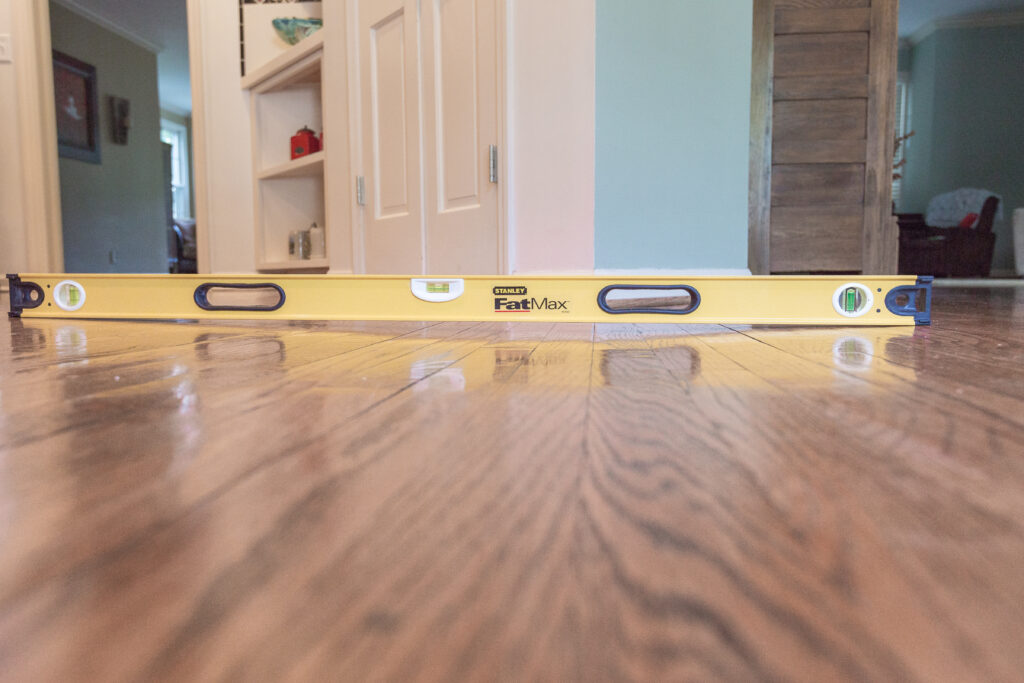
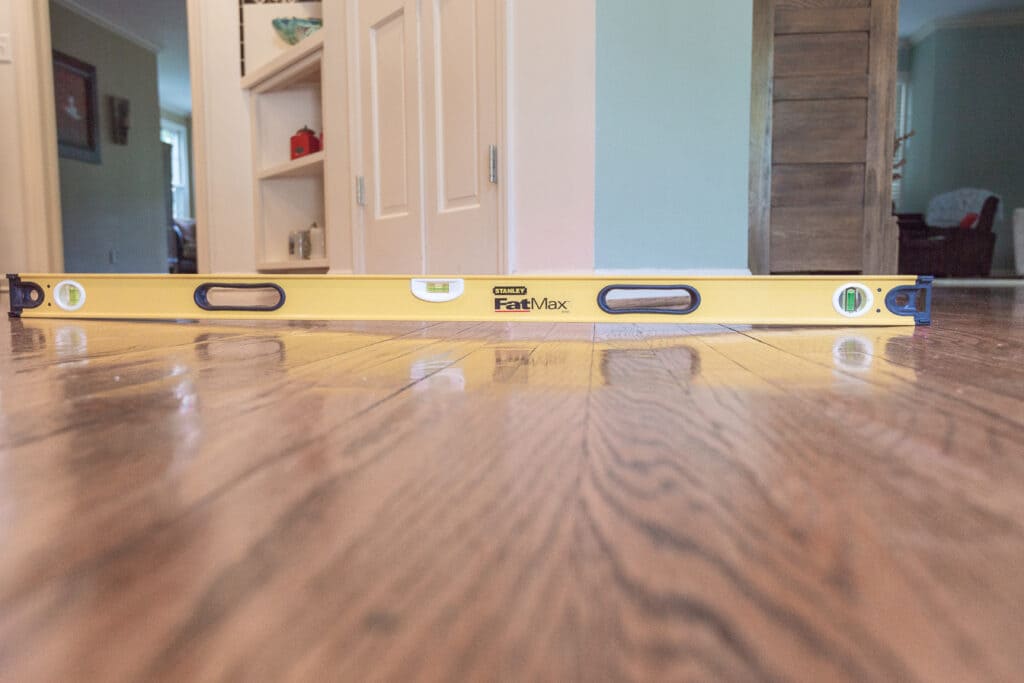
    Sloping or uneven floors are common signs of foundation problems

    #3: Interior Walls, Floors, Doors, & Windows

    Check for cracks, sloping, or other signs your foundation is shifting.

    Movement in the foundation creates “stress points” in the rigid frame of your house. This is often where homeowners first notice trouble.

    Look for:

    • Doors and Windows: Do they stick, fail to latch, or have large gaps at the top?
    • Drywall Cracks: Look for diagonal cracks extending from the corners of door frames or windows.
    • Sloping Floors: Use a marble or a level on hard floors to see if there is a consistent pitch.
    • Nail Pops: Look for small, circular bumps or holes where nails are pushing out of the drywall.
    • Don’t worry about: Seasonal sticking of wood doors such as sticking in the humid summer but swinging freely in the dry winter is usually caused by humidity-related wood expansion, not foundation issues.
    the cost of doing nothing for your

    #4: Below-Grade Basement or Crawl Space

    The space under your home is most honest indicator of structural health.

    Moisture problems will most often start showing symptoms where your home’s foundation rests on wet soil.

    Take note of:

    • Odors: Do you notice a “wet forest” or musty smell?
    • Visible Seepage: Look for damp spots on the floor or walls after a heavy rain.
    • Sagging Floors: If you have a crawl space, check if the floor joists are sagging or if the “shimming” looks loose.
    • Mold/Mildew: Check the bottom of wooden joists or insulation for dark spotting.
    • Don’t worry about: A small amount of condensation on cold water pipes or a slightly damp feel during high-humidity months is common and can often be solved with a dehumidifier.

    oregon homes Structural Health

    #5: Environmental & Historical Factors

    Don’t just look around the home, look around the home.

    Consider the “hidden” variables of your property’s location that may indicate the soil under your home is shifting.

    Look for:

    • Soil Type: Is your home built on “expansive clay” (which swells when wet and shrinks when dry)?
    • Tree Proximity: Large trees close to the home can “drink” the moisture out from under your foundation.
    • Recent Excavation: Has there been any major digging or pool installation nearby?
    • Age of Home: Older homes may have “parged” foundations that require different maintenance.
    • Don’t worry about: Minor “settlement” cracks in a brand-new home (built within the last 1–3 years) are expected as the heavy structure compresses the soil for the first time.

    tf maintenance services banner mobile Structural Health

    Stay Safe, Dry, and Stable with annual check ups

    Don’t skip regular self-check ups, and catch problems early.

    And if you see concern areas worsening, take action. Problems caught sooner and smaller are easier and cheaper to repair.

    Take note of:

    • Document: Take clear photos of any cracks or damp spots you find.
    • Scale: Include a size reference in your photos, such as a tape measure or a coin, so you can accurately track changes.
    • Track: Re-inspect these same areas every 6 to 12 months; if a crack is growing or a door is sticking more frequently, the issue is active.
    • Don’t worry about: Most homes undergo a “bedding-in” process where minor, non-moving cracks appear and never change again. If your photos look the same year after year, your foundation is likely stable.

    Hey Portland,

    Your home survives – even thrives – on coffee and rain, just like you. And like you, it’s probably overdue for a checkup.

    Our simple 5-Step Structural Health Checklist will help you do a simple annual home checkup, and catch small problems before they become big ones. And we’ll show you what not to worry about!

    Not Sure What You’re Seeing?

    Schedule your free
    Foundation Evaluation

    Schedule your free
    Foundation Evaluation

    tf n logo Structural Health
    facebook logo Structural Health
    bbb Terrafirma Award 2 Structural Health
    HA elite Terrafirma Awar Banner 2 Structural Health
    yelp logo Structural Health
    facebook logo Structural Health
    tf n logo Structural Health
    bbb Terrafirma Award 2 Structural Health
    HA elite Terrafirma Awar Banner 2 Structural Health
    yelp logo Structural Health
    FN RES FR Sagging Floor 04 1024x683 1 Structural Health
    When the soil beneath a building’s foundation compresses or shifts unequally, it causes parts of the foundation to sink or settle more than others. This uneven settling commonly results in noticeable sloping or uneven floors.
    Foundation Settlement
    cracked wall in basement foundation small Structural Health
    Common symptoms of this problem include horizontal or stair step cracking along the foundation wall, diagonal cracks in the corners, crumbling walls and inward bulges.
    Look for spalling cracks or delamination which can impact structural integrity.
    Cracks in Foundation and Basement Walls
    window door stuck jammed small Structural Health
    If your windows and/or doors are sticking, jamming, or your doors have non-functioning locks, you could have a foundation problem. Other common signs include door openings that aren’t square and diagonal cracks at top corners of window and door openings.
    Jammed Windows and Sticking Doors
    tilting chimney small Structural Health
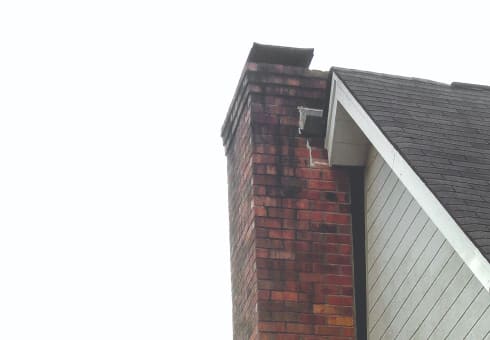
    A leaning or tilting chimney, generally accompanied by cracks where the chimney foundation meets the home foundation. Damage to the roof where flashing meets the chimney, or gaps between the chimney and home walls that have been filled in with mortar, foam, or caulk.
    Tilting Chimneys
    cracked sidewalk uneven small Structural Health
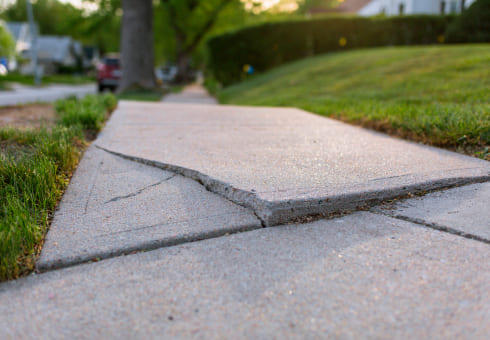
    Driveways in our region can often become cracked and sunken. Issues with the soil underneath those concrete driveway slabs are usually accompanied by concrete sidewalk cracks and raised sidewalks.
    Cracked and Uneven Sidewalks & Driveways
    efflorescence small Structural Health
    Water stains on concrete walls are caused by mineral deposits from the water drying on the concrete. Efflorescence stains appear as a white or grayish ash on the wall.
    Keep an eye on basement walls getting yellow, orange or black stains as these are all symptoms related to moisture getting in.
    These are also signs that soil or hydrostatic pressure outside the foundation walls could lead to foundation failure.
    Stained Basement Walls + Efflorescence
    FN RES FR Sagging Floor 04 1024x683 1 Structural Health
    Foundation Settlement

    When the soil beneath a building’s foundation compresses or shifts unequally, it causes parts of the foundation to sink or settle more than others. This uneven settling commonly results in noticeable sloping or uneven floors.

    cracked wall in basement foundation small Structural Health
    Cracks in Foundation and Basement Walls

    Common symptoms of this problem include horizontal or stair step cracking along the foundation wall, diagonal cracks in the corners, crumbling walls and inward bulges.
    Look for spalling cracks or delamination, which can impact structural integrity.

    window door stuck jammed small Structural Health
    Jammed Windows and Sticking Doors

    If your windows and/or doors are sticking, jamming, or your doors have non-functioning locks, you could have a foundation problem. Other common signs include door openings that aren’t square and diagonal cracks at top corners of window and door openings.
    tilting chimney small Structural Health
    Tilting Chimneys

    A leaning or tilting chimney, generally accompanied by cracks where the chimney foundation meets the home foundation. Damage to the roof where flashing meets the chimney, or gaps between the chimney and home walls that have been filled in with mortar, foam, or caulk.
    cracked sidewalk uneven small Structural Health
    Cracked and Uneven Sidewalks & Driveways

    Driveways in our region can often become cracked and sunken. Issues with the soil underneath those concrete driveway slabs are usually accompanied by concrete sidewalk cracks and raised sidewalks.

    efflorescence small Structural Health
    Stained Basement Walls + Efflorescence

    Water stains on concrete walls are caused by mineral deposits from the water drying on the concrete. Efflorescence stains appear as a white or grayish ash on the wall.
    Keep an eye on basement walls getting yellow, orange or black stains as these are all symptoms related to moisture getting in.
    These are also signs that soil or hydrostatic pressure outside the foundation walls could lead to foundation failure.

    TERRAFIRMA ADVICE & TIPS

    Our team has over 20 years of experience fixing foundations across Oregon & Washington.
    Check out their helpful Homeowner Tips and some great Case Studies of our Foundation Repair work.

    foundation
    Homeowner
    REVIEWS

    Don’t take our word for it – see what our clients have to say.
    From Roseburg to Eugene, Portland to Seattle, our Foundation Repair work speaks for itself

    Seth came out to evaluate my foundation and gave me one of the most thorough and honest assessments I've experienced from a contractor. Professional, communicative, and zero pressure — he clearly takes pride in his work. I didn't move forward with the project through Terra Firma, but that has nothing to do with Seth or the quality of his visit. Highly recommend requesting him specifically. 5 stars.
    If you hire this company to put sump pumps in your basement, make sure you know exactly where they are going to put them and where the pipes that will pump the water outside will be coming out of your house. Even though one guy gives you a diagram ahead of time, that doesn’t mean the guy actually doing the work follows it. One sump pump was put in our basement just as we expected. The second one was not. We provided new electrical outlets dedicated for use to the sump pumps. The second pump now has cords hanging in mid air barely reaching the new plugs because that pump was not put where they told us it would be. Also, the pipes that take the water away from the house, we expected those to go through the foundation, not through the expensive cedar siding and be exposed on the front of our house! I was horrified to see those holes and said so. My husband redirected them to drill through the foundation so the pipes could not be seen once the work was done. They did that, but now we are left with holes to repair. They did not offer to repair them. The young men who did the work were kind and respectful and did what they thought were expected of them, but if you hire this company, make sure you know exactly where they are going to put everything and not assume anything even if you have a diagram!
    We had concerns about the foundation and flooring of the home due to water and moisture in the crawl space. Walt, out of the Roseburg office was very responsive and timely with accurate information for our situation. Ultimately, we decided on crawl space encapsulation. The bid was easy to read and laid out a comprehensive work plan for our home. They were also able to meet our scheduling needs for the timeline of our project.
    James and his crew were efficient, kind, and exceeded my expectations. My foundation was needed piers both outside and in the basement, yet they were quick and cleaned up. I even noticed a change in my home’s interior when it was fixed! Cracks closed up. They took care of the whole process, including permits and inspections. And, James communicated, including walking me through, clearly listening to my responses. I recommend TerraFirma, especially James who was the foreman on my job, especially to those who want to be respected, want to understand what is happening, and want good communication throughout the job.
    Bailey was timely and thorough in his assessment, estimate, and reporting on my inquiry about a foundation crack. Although I decided not to have any work done at this time I was pleased with their service.
    Mike, Steve and their crew from Terra Firma were outstanding. They were professional, on time and did some amazing work. I was very impressed with how they answered my questions and their quality of work. I would highly recommend Terra Firma for any of your foundation needs.
    We hired TerraFirma to fix our foundation. They inspected thoroughly, explained the plan, and completed the repairs professionally. The process was smooth, and we’re thrilled with the results. Highly recommend TerraFirma!
    I don’t usually do reviews but in this case people should know this is a first class company. Great communications and no selling you on something you don’t need. John was very professional, he spent time with us expanding what issues he did find, measured the level of the floors, inspected under the house and checked wall and foundation cracks. He also placed a blanket down to collect any dirt from entering and exiting the crawl space inside the house. I highly recommend John from the Eugene office and TerraFirma.
    My mother-in-law’s house was built in 1962 and has had basement water issues for more than 40 years. We’ve spent so much money trying to fix it over the years, but TerraFirma Foundation Systems completely transformed the situation—it feels like magic. Thank you to the team: Casey from sales and the crew members Antonio, Jessi, and Casey. The three musketeers worked efficiently and truly operated as a team. Thank you for bringing such an incredible change to my mother-in-law’s home! One suggestion for management: please focus on bringing happiness to your customers rather than worrying too much about potential lawsuits.
    Everyone, from the job estimator and office staff to that guys that repaired my foundation/driveway and installed the earthquake mitigation system, were very professional and courteous. Very happy with the final result!

    Foundation Repair Homeowner Questions

    Are cracks in a basement floor normal?

    Cracks in concrete are common. However, cracks are symptoms of potentially larger issues. The size, placement, and direction of cracks in your basement floor or walls can give insghts into the nature of the issue. Schedule your free in-home inspection with TerraFirma to learn more.

    When should I worry about cracks in my basement floor?

    You should be concerned about foundation cracks if the cracks in your basement floor are wider than 1/8 inch, spread to and up the foundation walls, appear in a circular pattern, are wet or show signs of water intrusion, have mold around them, have a white flaky substance around them

    Are foundation repairs covered by homeowner’s insurance?

    Insuance policies vary from home to home and company to company. The best action is always to speak with your insurance company to understand what is covered under your specific policy. Generally, home owners insurance will cover repairs if the damage can be tied back to an event e.g. leaky water heater, tree fell on house etc.

    Does foundation repair affect/increase home value?

    Yes. A damaged foundation can cause significant loss in property value, as well as potentially scaring off interested buyers. Repairing a damaged foundation helps restore the lost value in a home, and can even increase value when the repairs carry a transferable and long term warranty.

    How long does foundation repair take?

    Scope, size, and type of repair can vary, as will the amount of time a repair can take. However, most repairs can be made within a few days.


    James Kershaw

    James Kershaw is a Senior System Design Specialist and company trainer at TerraFirma, where he evaluates residential and commercial foundation, concrete, and waterproofing systems across Oregon and Washington. Over the course of his career, he has inspected thousands of homes throughout the Pacific Northwest, giving him a broad, real-world understanding of how regional soils, climate, and construction practices impact long-term structural performance.