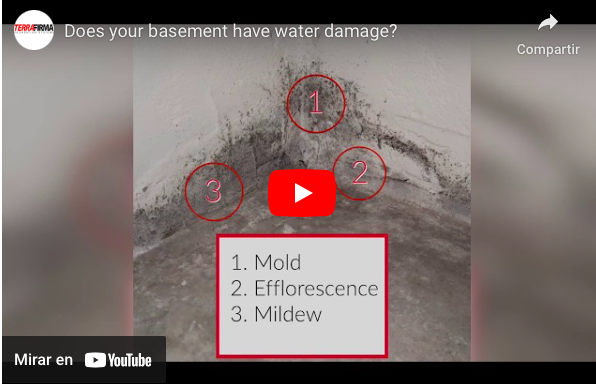
Does your basement have water damage?

Captura de Pantalla 2024 05 24 a las 13.12.50 basement

HOMEOWNER TIPS · VIDEO

Does Your Basement Have Water Damage?

Basement Waterproofing Warning Signs

Water Damage Often Starts With Small Warning Signs

A wet basement does not always begin with standing water. Damp walls, musty smells, stains, leaking cracks, or moisture where the wall meets the floor can all indicate that water is entering the space. Recognizing these signs early can help you understand when your basement needs a closer look.

TerraFirma’s basement waterproofing signs guide explains the common conditions homeowners should watch for, including wet walls, damp carpet, floor cracks, efflorescence, and cove-joint seepage.

01

Wet Walls or Floor Edges

Moisture appearing on basement walls, floors, or where the wall meets the slab can signal active water intrusion.

02

Musty Smells or Damp Finishes

Musty odors, damp drywall, wet carpet, or rusty floor vents are common clues that excess moisture is affecting the basement.

03

Stains and Efflorescence

White chalky residue and yellow, orange, or dark stains can be visible evidence that moisture has been moving through concrete or masonry.

Watch the Video

Does Your Basement Show Signs of Water Damage?

Use this quick TerraFirma video as a starting point, then compare what you see in your own basement with the warning signs below.

Where Can Basement Water Come From?

Basement moisture can enter in several ways. On TerraFirma’s current waterproofing pages, common issues include water moving through cracks, moisture collecting around the foundation, and seepage at the joint where the wall meets the floor.

Cracks and Wall Seepage

Cracks in basement floors or walls can become pathways for water, especially when moisture builds up in the soil outside the foundation.

Cove-Joint Moisture

Water can also appear where the basement wall and slab meet. This location is commonly called the cove joint and is one of the warning signs TerraFirma identifies for wet basements.

What to Do Next

Do Not Ignore Ongoing Basement Moisture

If you continue to see damp walls, wet carpet, stains, leaking cracks, or recurring musty odors, an on-site evaluation can help determine where the moisture is coming from and which basement waterproofing approach fits the property.

Learn more about TerraFirma’s basement waterproofing solutions, or request a free on-site estimate.

Basement Waterproofing Homeowner Questions

Which vapor barrier is best for weeping walls?

The VaporLoc Elite Wall System is better for weeping walls than other commonly used vapor barriers. The VLE system has double sealed seams, waterproof material (not water-resistant), and is much thicker than vapor barriers available at retail stores.

Basement waterproofing: interior vs exterior – which is better?

Interior waterproofing generally provides the most serviceable, comprehensive, and longest lasting solution.

Will a wet basement pass inspection?

Home inspectors cannot pass or fail a home, but only call out defects and make suggestions to consult a qualified contractor.

How long does basement waterproofing last?

TerraFirma-installed waterproofing systems are expected to last decades with regular care & maintenance. We also warranty our installations, our WaterGuard and DryTrak drainage systems come with a transferrable lifetime warranty. Terms apply, view the details here. We stand by our work and the quality of the systems we install.

Should I consider a vapor barrier if I’m not planning to finish my basement?

Even if you’re not planning on finishing your basement at this time, our wall panels can create a cleaner, brighter appearance while insulating and waterproofing your basement walls.

Schedule your free
Basement Evaluation

Schedule your free
Basement Evaluation