
 Free Estimate
 Financing
 Commercial Solutions
 Maintenance
 Bill Pay

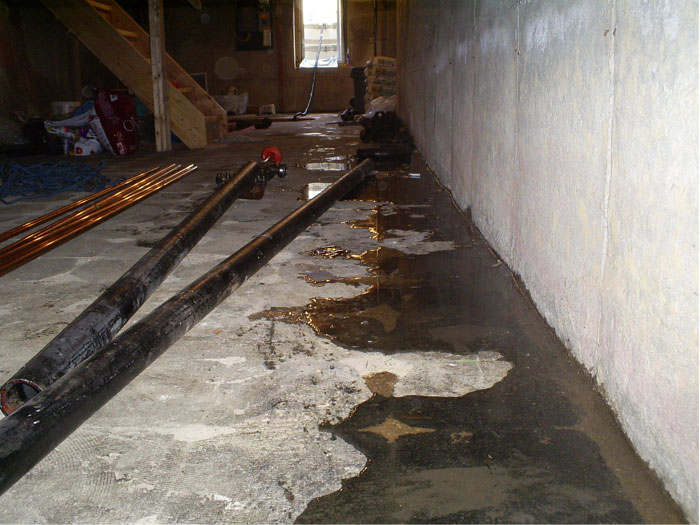
THE PUDDLE STARTS AT THE EDGE, in LAKE OSWEGO
Basement seepage in your Lake Oswego home? Learn what water along the wall-floor joint can mean and how drainage and waterproofing options are evaluated.
Dry in the middle
Wet at the edges
You move a storage bin and notice a thin line of water beside the wall. The rest of the room looks dry.
Basement seepage can first become visible along the perimeter rather than across the entire floor. For Lake Oswego homeowners, that location is a useful clue—but it does not identify the source by itself.

Where the wall meets the floor
Deserves a closer look
The junction between a basement wall and floor is often called the cove joint. Water may enter there when moisture collects around or beneath the foundation.
Basement seepage at this junction can be associated with groundwater and drainage conditions. However, water can also travel down a wall or across the floor before collecting at the edge.
TerraFirma’s guide to signs of a leaking basement explains how different moisture symptoms can appear inside the same room.
Where water collects
Is not always where it enters
Before treating basement seepage, the inspection should consider the path of the water. A plumbing leak, condensation, a wall crack, and water entering at the perimeter may need different solutions.
Notice the timing
Trace the pattern
A few observations can make a basement seepage assessment more informative. Take photos before cleanup when it is safe to do so, and note what happened before the moisture appeared.
After rain
Does the wet area appear during a storm, several hours later, or even in dry weather? Record the timing rather than assuming a connection.
Along the wall
Look for visible water trails, damp patches, or staining above the puddle. These may help identify where further investigation is needed.
Near equipment
Note nearby pipes, appliances, and drains. Include their location when describing the problem to the inspector.
Give incoming water
An intentional path
Where basement seepage involves recurring groundwater entry, an assessment may recommend a water-management system rather than a surface treatment alone.
Collect
Interior drainage can collect water at designated areas of the basement perimeter and direct it toward a sump basin.
Discharge
A sump pump moves collected water to an appropriate discharge location. The outlet route and system capacity need consideration.
Manage humidity
Dehumidification may help control airborne moisture. It serves a different purpose from collecting and removing incoming water.
TerraFirma’s basement waterproofing solutions explain how these components can work together.
Ask what the proposal covers
And how it will work
A basement seepage proposal should explain the observed conditions, the recommended collection area, and where water will discharge. Ask about maintenance and which existing components will remain in use.
If a system is already installed, share its service history and describe where water appears in relation to it. A recurring wet area does not automatically establish which component needs attention.
The puddle is a clue
Find the explanation
Recurring basement seepage deserves more than repeated cleanup. Understanding the entry path helps connect the visible symptom with an appropriate repair.
For basement seepage in Lake Oswego, explore TerraFirma’s local basement and foundation services to learn about the home concerns the team evaluates.
basement
Homeowner
REVIEWS
Don’t take our word for it – see what our clients have to say.
From Roseburg to Eugene, Portland to Seattle, our Foundation Repair work speaks for itself


