
 Free Estimate
 Financing
 Commercial Solutions
 Maintenance
 Bill Pay

Let’s take a closer look at earthquake risks in Eugene, OR, and how modern retrofitting solutions help protect homes from structural damage. Understanding how seismic forces impact your home—and how reinforcement systems improve stability—is essential to protecting your property, safety, and long-term value.
Recently, an earthquake with magnitude 5.5 occurred 135 miles west of Bandon, Oregon. It reminded Oregonians about the fact that being located in the Pacific Northwest implies certain risks of earthquakes and their consequences.
Luckily, this earthquake didn’t cause any damage nor trigger any tsunami alert.
But it raises a legitimate concern for many homeowners:
“What if this time my home had sustained damage? Would my homeowners insurance have covered the costs of the repairs?”
And the answer will surprise many people.
Indeed, in most cases, standard homeowners insurance doesn’t cover earthquake damage. Seismic activity, including foundation cracks, structural shifting, and crawl space damage, requires a separate earthquake insurance policy.
Knowing what your insurance covers and what earthquake retrofitting could do to prevent further issues may help you make informed decisions in case another earthquake strikes Oregon.
Does Standard Homeowners Insurance Cover Earthquake Damage?
Mostly no.
A standard homeowners insurance policy usually includes protection against:
- Fire
- Windstorm
- Hail
- Theft
- Some types of water damage
- Falling trees
Earthquakes are not included in standard policies.
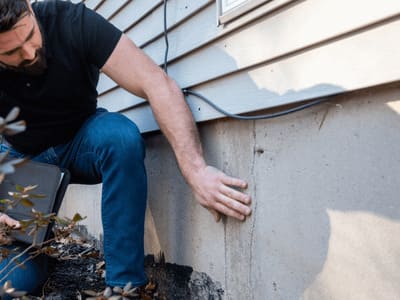
Therefore, if an earthquake causes damage to the foundation, walls, floors, and other structural parts of your house, it won’t be covered by your homeowner insurance policy unless you have purchased earthquake insurance.
As every policy is different, it’s important to check it and discuss details with your insurance provider.

What Does Earthquake Insurance Typically Cover?
An additional earthquake insurance policy may cover the following damages:
- Structural damage to your house
- Foundation repair
- Damages to the attached structures
- Personal belongings (it depends on the policy)
- Living expenses if your home becomes uninhabitable due to the earthquake
Limitations, deductibles, and exclusions vary from one insurance company to another.
Also, earthquake insurance usually includes much higher deductibles than standard homeowner insurance.
What Is the Retrofitting Process Like?
The process starts with a detailed assessment by a structural engineer or foundation specialist. They’ll evaluate your home’s foundation, framing, and weak points, then create a retrofit plan tailored to your property’s needs.
Technicians drill and install anchor bolts to securely connect the home’s framing to its concrete foundation. This prevents lateral movement and helps the structure stay grounded during seismic shaking.
Strategically placed shear walls made of plywood or engineered wood panels increase lateral stability. These reinforcements help distribute forces and reduce the risk of wall collapse.
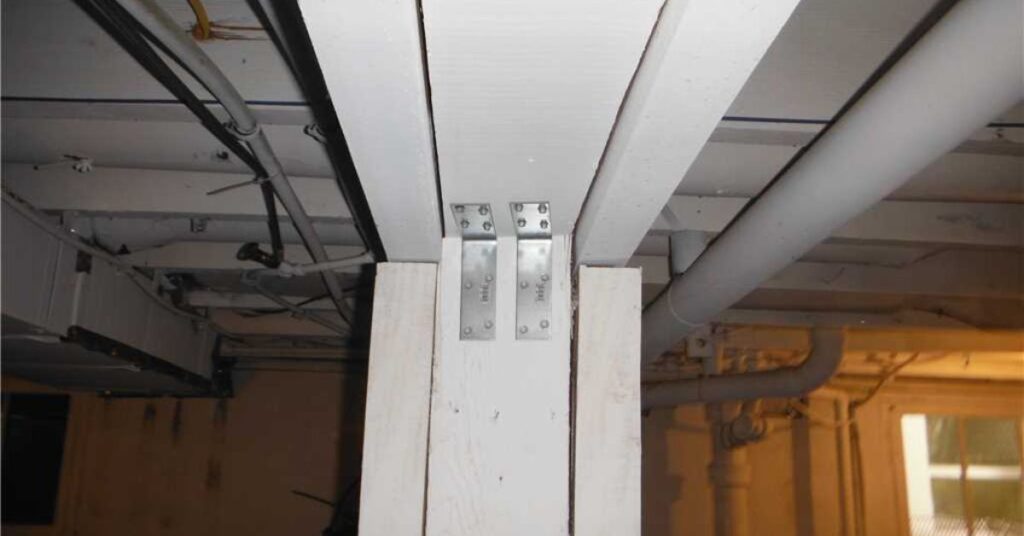
Steel braces, straps, and connectors are installed at critical junctions such as walls, floors, and roofs. These additions strengthen the home’s overall framework and ensure consistent load distribution.
Technicians will anchor heavy appliances, secure water heaters, and add protective measures for gas lines and meters to prevent leaks or fire hazards after an earthquake.
During retrofitting, technicians may notice substantial foundation damage that needs immediate repair. Adding crawl space support posts and foundation piers, and stabilizing the walls are some of the ways TerraFirma can reinforce your foundation.
How To Choose An Earthquake Retrofitting Contractor In Eugene, OR
Choosing the right contractor is an important part of making sure seismic improvements are done correctly.
Homeowners should look for a company that understands structural systems, foundation performance, and the specific conditions affecting homes in Oregon. Earthquake retrofitting is not just about adding hardware—it requires a clear understanding of where a home is vulnerable and how the structural components work together.
A quality contractor should provide a thorough assessment, explain the areas of concern clearly, and outline a retrofit plan that makes sense for the home’s age and construction type.
It’s also helpful to choose a company with experience in foundation and structural work, since seismic retrofitting often involves areas like crawl spaces, sill plates, and foundation connections.
It’s also helpful to choose a company with experience in foundation and structural work, since seismic retrofitting often involves areas like crawl spaces, sill plates, and foundation connections.
Take Action Before the Next Quake
Eugene’s proximity to the Cascadia Subduction Zone makes earthquake preparedness essential, not optional. We will conduct every step of earthquake retrofitting and offer additional services such as basement waterproofing, crawl space encapsulation, concrete leveling, and foundation stabilization.
Contact TerraFirma’s Foundation Systems specialists to schedule a free estimation or give us a call with any questions. We’re here to support you through every step of the retrofitting process.



