
 Free Estimate
 Financing
 Commercial Solutions
 Maintenance
 Bill Pay

How helical piers can improve earthquake resilience
UNDERSTANDING THE RISK
THE FOUNDATION BENEATH EARTHQUAKE READINESS: HELICAL PIERS FOR EARTHQUAKE RESILIENCE
Earthquakes can place sudden and powerful stress on a home’s foundation. Helical Piers for Earthquake Resilience can help strengthen foundation support, especially in Oregon and Washington, where homes may experience ground shaking from the Cascadia Subduction Zone, shallow crustal faults, and deeper earthquakes.
The strength of a home during an earthquake does not depend only on what is visible above ground. Helical Piers for Earthquake Resilience can improve foundation support when soil conditions, damaged footings, or poor structural load transfer affect how the building responds to ground shaking. TerraFirma’s foundation repair solutions are designed around these site-specific conditions.
Helical piers for earthquake resilience may help stabilize a settling foundation by transferring its weight through weak or unstable soil and into deeper, more competent soil. Although no single foundation product can make a home earthquake-proof, a properly designed pier system can become an important part of a broader earthquake-retrofitting plan.
SOIL & FOUNDATION RISK
WHY FOUNDATION SOIL MATTERS DURING AN EARTHQUAKE
During an earthquake, the ground moves in multiple directions. This movement can place vertical and lateral forces on a foundation. If the soil beneath the home is loose, saturated, improperly compacted, or already contributing to settlement, the foundation may be more vulnerable to movement.
✓ Uneven settlement
✓ Foundation cracking
✓ Shifting or rotating footings
✓ Separation between structural components
✓ Damage caused by unstable or liquefied soil
✓ Additional movement in areas with poorly compacted fill
WHAT IS SOIL LIQUEFACTION?
Soil liquefaction can occur when loose, water-saturated soil temporarily loses strength during strong shaking and begins behaving more like a liquid. Helical Piers for Earthquake Resilience can transfer a home’s structural load to deeper, more stable soil. However, liquefaction risk varies based on location, groundwater conditions, soil composition, and earthquake intensity.
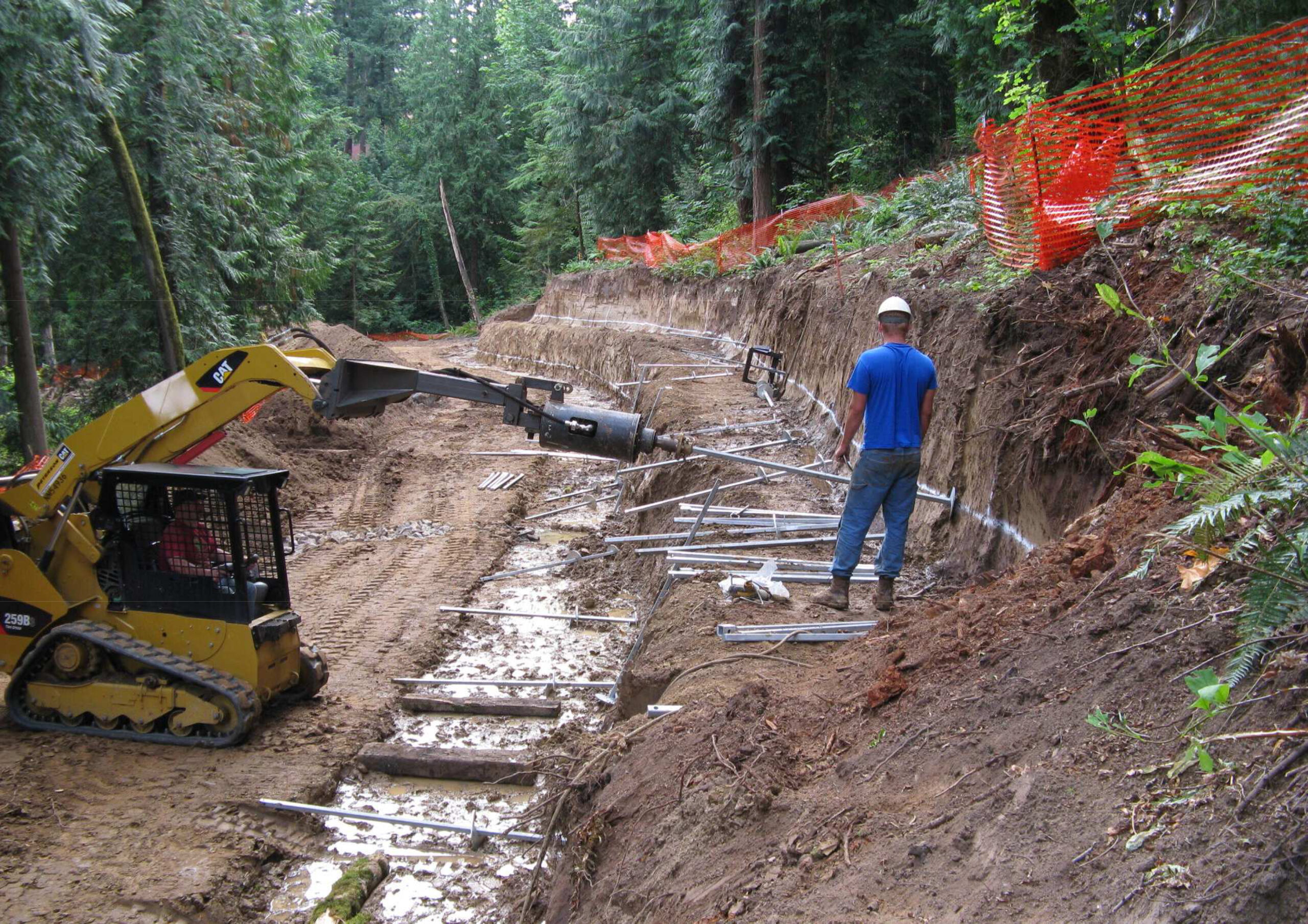
Engineered ground-support systems can help manage unstable site conditions and improve long-term soil stability.
FOUNDATION SUPPORT
WHAT ARE HELICAL PIERS?
Helical Piers for Earthquake Resilience are steel foundation elements with circular, helix-shaped plates attached to their shafts. Specialized equipment rotates each pier into the ground until it reaches the depth and installation capacity required for the project. Learn more about TerraFirma’s foundation pier systems and repair options.
Once installed, the pier can be connected to the existing foundation with an engineered bracket. The structure’s weight is then transferred away from weaker surface soil and into deeper load-bearing soil.
01
Install
The steel pier is rotated through weak or unstable surface soil.
02
Verify
Installation torque is monitored to help verify the required supporting capacity.
03
Stabilize
An engineered bracket connects the pier to the foundation and transfers the structural load.
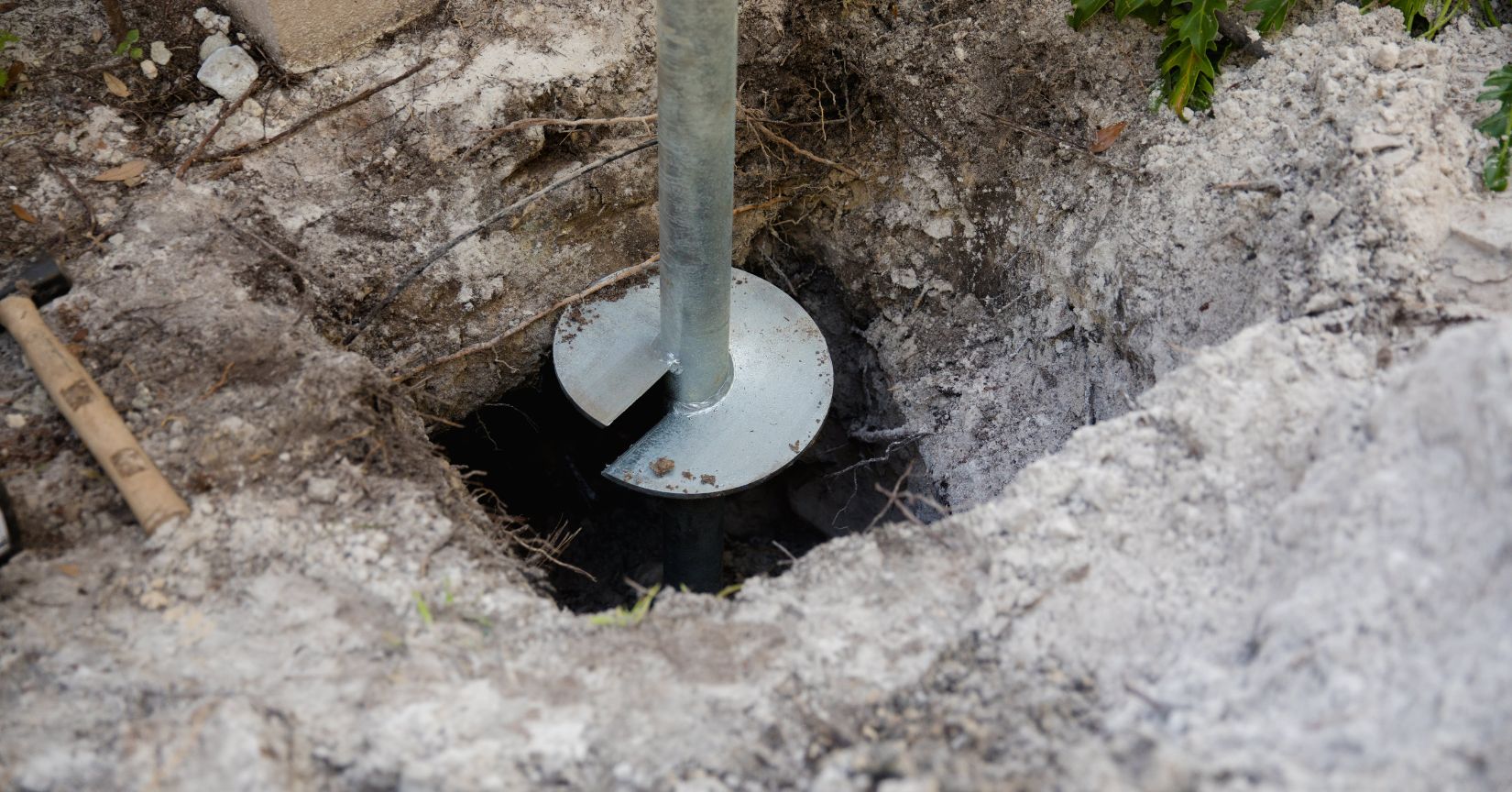
Helical piers are installed through weaker surface soils to reach deeper, more stable load-bearing soil.
Helical piers may be used to:
- Stabilize a settling foundation
- Support parts of an existing structure
- Transfer structural loads to stronger soil
- Support new construction or additions
- Address foundation problems associated with weak or variable soil
Site-Specific Design Matters
The appropriate pier depth, spacing, capacity, and repair design must be determined based on the structure and site conditions.
FOUR POTENTIAL BENEFITS
HOW HELICAL PIERS CAN IMPROVE EARTHQUAKE RESILIENCE
When site conditions and the structure make them appropriate, helical piers for earthquake resilience can contribute to a broader seismic-strengthening plan in several important ways.
01
They Transfer Loads Below Unstable Surface Soil
Traditional shallow foundations rely heavily on soil located near the surface. When that soil is soft, loose, wet, or poorly compacted, it may move or lose strength during seismic activity.
Helical piers extend below these weaker layers and transfer the structure’s load to deeper, more competent soil. This can provide a more stable support point when surface conditions are unreliable.
02
They Can Help Stabilize Existing Settlement
A foundation that is already settling or moving unevenly may be more vulnerable when additional forces are introduced during an earthquake.
Helical piers can be installed to stabilize affected portions of the foundation and help prevent continued settlement. Depending on the structure and the engineer-approved repair plan, some foundations may also be lifted toward their previous position.
Addressing existing settlement does not eliminate seismic risk, but it can correct a known structural weakness before an earthquake places additional stress on the home.
03
Installation Torque Helps Confirm Capacity
During installation, technicians monitor the amount of torque required to advance each helical pier. That information helps determine whether the pier has reached soil capable of supporting the required structural load.
This gives the project team measurable installation information rather than relying only on assumptions about the soil beneath the foundation.
04
They Can Be Used in Difficult Access Areas
Helical piers can often be installed using relatively compact equipment. This makes them suitable for many existing homes, additions, commercial structures, and locations where large excavation equipment would be difficult to use.
Their installation may also require less excavation than replacing major portions of a conventional foundation.
FEATURED VIDEO
See How Helical Piers Perform During an Earthquake
Watch this real-world overview of how structures supported by helical piers performed during major seismic events.
THE COMPLETE STRUCTURAL SYSTEM
Helical Piers Are Only One Part of Earthquake Preparation
Helical piers address foundation support, but earthquake resilience requires looking at the home as a complete structural system.
✓ Connections between the house and foundation
✓ Cripple wall reinforcement
✓ Foundation condition and cracking
✓ Lateral movement resistance
✓ Soil and groundwater conditions
✓ Chimneys and other vulnerable masonry
✓ Gas, water, and utility connections
✓ Previous additions or structural modifications
A home could have stable vertical foundation support but remain vulnerable if it is not properly connected to its foundation. Likewise, a retrofit above the foundation may not correct settlement caused by weak soil. The appropriate solution depends on the home, its foundation, the soil beneath it, and the seismic hazards associated with the property. TerraFirma explains these additional protections on its earthquake-retrofitting service page.
Helical piers can improve foundation stability, but they do not make a home earthquake-proof.
OREGON & WASHINGTON
Why This Matters in the Pacific Northwest
The Pacific Northwest faces several distinct earthquake hazards. According to the USGS, the region can experience deep earthquakes, shallow crustal earthquakes, and major Cascadia Subduction Zone events.
Current USGS estimates identify a 10% to 15% probability of an approximately magnitude 9 Cascadia earthquake within the next 50 years. The Puget Sound region also faces risks from deep and shallow crustal earthquakes.
Earthquake preparedness should therefore consider both the structure and the ground supporting it. Properties constructed over loose fill, soft soil, high groundwater, or areas susceptible to liquefaction may require closer evaluation.
USG REGIONAL ESTIMATE
10%–15%
Probability of an approximately magnitude 9 Cascadia earthquake within the next 50 years, according to the cited USGS summary.
KNOW WHAT TO WATCH FOR
Warning Signs Your Foundation May Need an Evaluation
✓ Stair-step cracks in brick or concrete block
✓ Cracks that continue expanding
✓ Doors or windows that no longer close correctly
✓ Uneven or sloping floors
✓ Gaps between walls, ceilings, or floors
✓ A chimney pulling away from the home
✓ Visible foundation settlement
✓ Previous repairs that have begun moving again
Important: These signs do not automatically mean a home needs helical piers. They indicate that the structure may be moving and that the underlying cause should be identified.
START WITH AN EVALUATION
Concerned About Your Foundation or Earthquake Readiness?
TerraFirma provides foundation repair and earthquake-retrofitting solutions for homeowners throughout Oregon and Washington. Our team can inspect visible signs of settlement, explain the available options, and help determine whether helical piers for earthquake resilience should be considered.
Helical Piers
HOMEOWNER QUESTIONS
Do helical piers make a house earthquake-proof?
No. Helical piers can improve foundation stability, but no single product can make a home earthquake-proof. Soil conditions, structural connections, foundation design, and the intensity of ground movement all influence earthquake performance.
How do helical piers work during an earthquake?
Helical piers transfer structural loads through weak surface soil and into deeper load-bearing soil. This may help reduce foundation settlement or movement associated with unstable upper soil layers.
Can helical piers help in areas with liquefaction risk?
Helical piers may be designed to extend through weak or liquefiable soil into deeper supporting material. However, liquefaction can create complex vertical and lateral forces, so site-specific engineering may be required.
Can helical piers be installed under an existing home?
Yes. Helical piers are commonly used to stabilize existing foundations. They are installed beside the affected foundation and connected with engineered brackets.
Does every settling foundation need helical piers?
No. The appropriate repair depends on what is causing the movement, the type of foundation, the condition of the soil, and the structural loads involved.