
 Free Estimate
 Financing
 Commercial Solutions
 Maintenance
 Bill Pay

Fresh Paint Won’t Tell You What’s Missing Below, in BEAVERTON
Considering a seismic retrofit in Beaverton, OR? Learn how foundation connections, cripple walls, and existing damage affect your home’s earthquake readiness.
The kitchen looks updated. The floors feel solid. The front door closes just fine. But none of those details tells you how securely your home is connected to its foundation.
For Beaverton homeowners considering a seismic retrofit, that hidden connection is an important starting point. A house can look well-maintained while still having weaknesses beneath the first floor.
What’s holding
your home in place?
During earthquake shaking, the connections between the foundation and wood framing help transfer forces through the structure. Missing or inadequate connections can leave vulnerable points along that path.
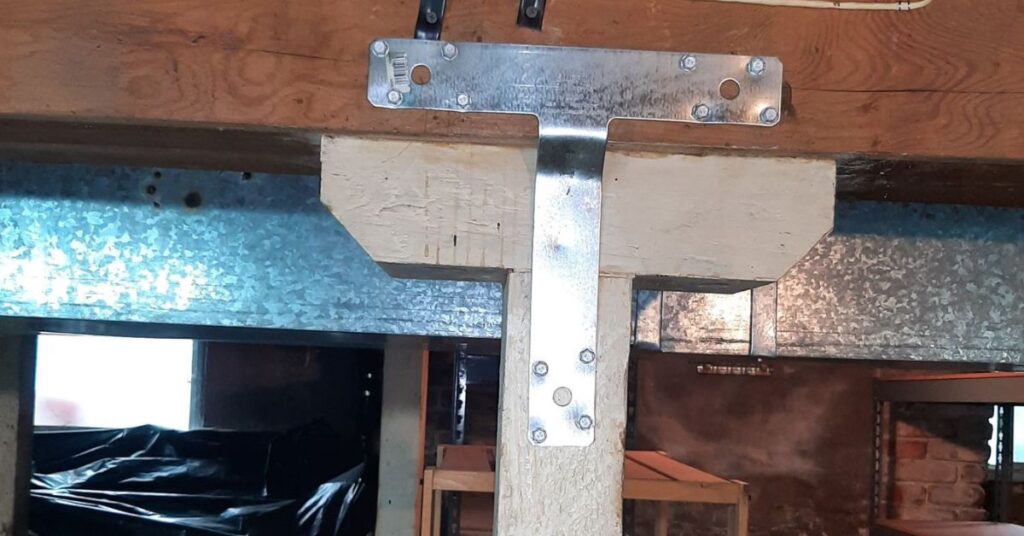
A seismic retrofit focuses on strengthening those connections. Depending on the home, the work may involve foundation anchoring, bracing short framed walls, or reinforcing connections between structural components.
TerraFirma’s earthquake retrofitting services begin with evaluating the existing structure rather than assuming every house needs the same hardware.
A seismic retrofit starts
with the connections.
The goal is to identify where the home’s structural connections need attention. These areas help explain why an inspection matters more than a quick look from outside.
The foundation-to-frame connection
The sill plate is the wood member resting on the foundation. Its anchorage helps connect the framing to the concrete below. A seismic retrofit may include suitable anchors or connectors where the existing connection is inadequate.
Short walls beneath the floor
Some homes have cripple walls: short wood-framed walls between the foundation and the first floor. Where these walls need reinforcement, a seismic retrofit may include structural sheathing and appropriate connections to improve resistance to sideways forces.
The condition of the supporting materials
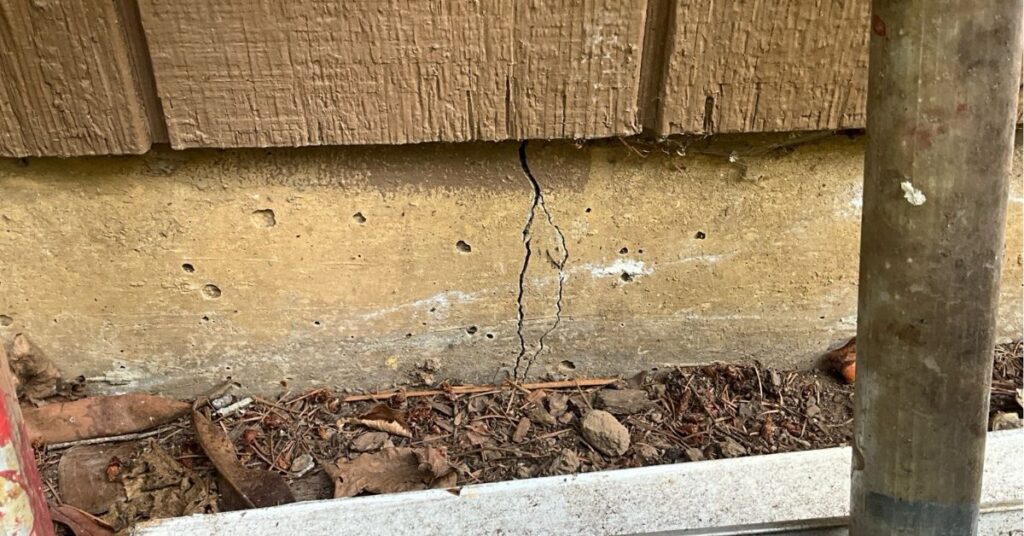
Hardware needs suitable materials to connect to. Deteriorated wood, damaged concrete, or existing movement can change the recommended work. A seismic retrofit should account for those conditions rather than simply adding connectors around them.
Find the records.
Skip the guesswork.
Preparing for a seismic retrofit starts with understanding what has already been done to the home.
- Gather the original construction date and any available structural drawings.
- Look for permits, inspection records, or invoices from earlier earthquake reinforcement.
- Note additions or remodels that may have changed the structure.
- Share known foundation repairs, recurring moisture problems, or damaged framing.
- Make the crawl space or basement access point available for the inspector.
Existing repairs tell
part of the story.
A repaired foundation does not automatically confirm that all earthquake connections have been addressed. Likewise, an older retrofit invoice may describe work completed in only one area. Ask which parts of the home were evaluated and what the documentation actually covers.
If a seismic retrofit assessment identifies settlement or foundation damage, those findings may require separate foundation repair solutions . Understanding how the work fits together helps avoid treating different structural concerns as interchangeable.
Readiness begins
with better information.
A seismic retrofit can reduce certain structural vulnerabilities, but it cannot make a home earthquake-proof. The appropriate work depends on the building’s construction, foundation condition, existing connections, and any engineering requirements.
For homeowners exploring TerraFirma’s services in Beaverton , the useful first question is simple: what connects this house to its foundation, and what evidence shows that connection has been evaluated?
TerraFirma Homeowner Resources
Know the three F’s
of earthquake damage.
What could earthquake shaking mean for your home? Watch TerraFirma introduce the three F’s flexing, failure, and fire and explain why earthquake retrofitting matters for older homes.
Every home has different structural conditions. An evaluation helps identify vulnerabilities and determine appropriate retrofit measures.



